

In 2026, the debate around human expertise vs automation is no longer about choosing one over the other. It’s about finding the right balance. Businesses that rely only on automation risk losing creativity, empathy, and strategic thinking. On the other hand, companies that ignore automation struggle with scalability, speed, and efficiency.
If you run a digital platform, service business, or content-driven website like minearticle.com, understanding this balance can directly impact your growth, profitability, and authority.
Understanding Human Expertise in the Modern Era
Human expertise is not just knowledge. It’s the combination of:
- Experience
- Contextual judgment
- Emotional intelligence
- Creativity
- Ethical reasoning
- Adaptability
Automation can follow instructions. Humans can interpret nuance.
For example:
- A machine can generate content.
- A human can understand audience psychology.
- A system can schedule posts.
- A strategist can build brand trust.
Why Human Expertise Still Matters in 2026
Even with AI, automation tools, and machine learning dominating industries, human involvement remains critical because:
- Trust is Human
Customers trust people, not algorithms. - Creativity Cannot Be Fully Automated
Innovation often comes from unexpected human insights. - Ethical Judgment
Automation follows rules. Humans question them. - Brand Voice & Authority
True authority is built through real-world experience and lived expertise.
What Automation Does Best
Automation excels in structured, repetitive, data-driven tasks.
Key Areas Where Automation Wins
- Data processing
- Scheduling
- Email sequences
- Report generation
- Customer ticket routing
- Analytics tracking
- Workflow management
Popular Automation Platforms
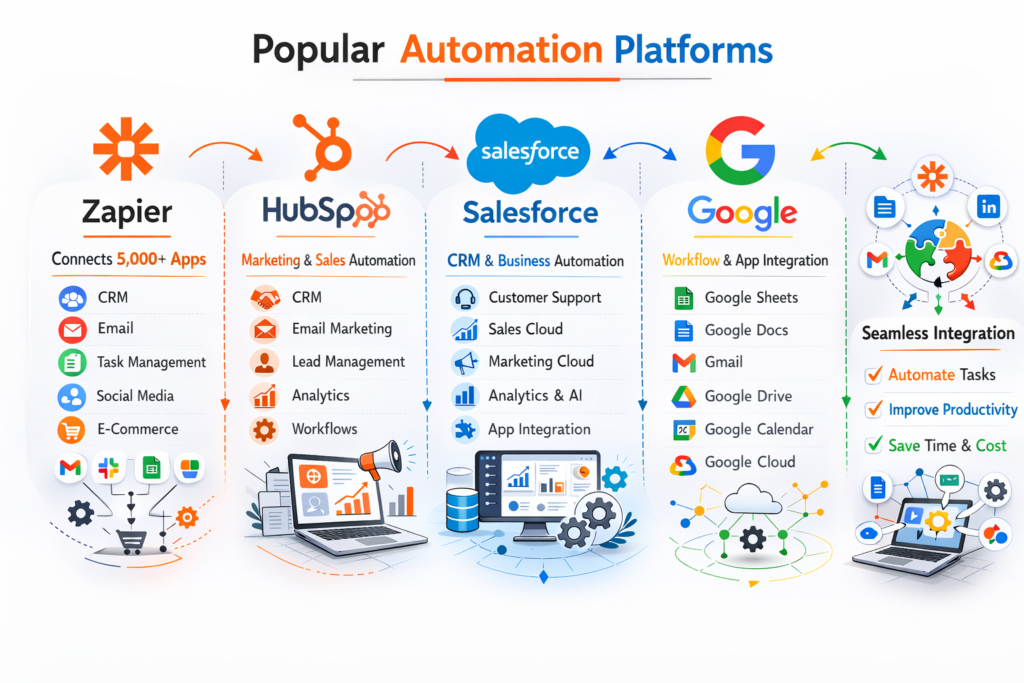
Zapier | HubSpot | Salesforce | Google
These tools reduce operational workload and increase efficiency. However, they still require human setup, supervision, and strategic alignment.
Automation is a multiplier — not a replacement.

The Risks of Over-Automation
Many businesses fall into the trap of “automate everything.” This often leads to:
1. Loss of Brand Personality
Over-automated emails and content feel robotic.
2. Customer Frustration
AI chatbots without escalation options damage trust.
3. Strategic Blind Spots
Automated analytics show numbers. Humans interpret meaning.
4. Ethical & Legal Risks
Automation without oversight can create compliance problems.
5. Content Saturation
Fully automated content production often lacks originality and depth.
Google’s evolving search ecosystem favors helpful, experience-driven content. Pure automation without human editing often fails long-term.The Smart Balance Framework (5-Step Model)
Here’s a practical model to balance human expertise and automation:
Step 1: Identify Repetitive Tasks
List tasks that:
- Follow predictable steps
- Don’t require emotional judgment
- Consume too much time
These should be automated first.
Step 2: Protect Strategic Decision-Making
Never automate:
- Brand positioning
- Crisis management
- High-level strategy
- Ethical approvals
- Editorial standards
These require human expertise.
Step 3: Use Automation as Support, Not Authority
Automation should assist experts, not replace them.
Example:
- AI drafts content.
- Human edits, refines, adds experience.
Step 4: Maintain Human Oversight
Every automated system must have:
- Regular review cycles
- Quality control
- Performance audits
Step 5: Continuously Rebalance
Technology evolves. Your balance must evolve too.
Industry Examples: Where Balance Matters
Content & Publishing
Automation helps with:
- Topic clustering
- Keyword research
- Grammar suggestions
Humans handle:
- Storytelling
- Insight
- Real examples
- Audience psychology
Customer Support
Automation handles:
- FAQ responses
- Ticket classification
- Order tracking
Humans manage:
- Emotional complaints
- Refund disputes
- Complex scenarios
Marketing & SEO
Automation handles:
- Analytics dashboards
- A/B test tracking
- Campaign scheduling
Humans interpret:
- Market shifts
- Consumer behavior
- Brand positioning
The Financial Impact of Balance
When done right, balancing human expertise and automation leads to:
- Reduced operational cost
- Faster turnaround times
- Higher customer retention
- Better SEO performance
- Stronger brand authority
- Long-term scalability
Companies that combine both intelligently outperform those choosing extremes.
The Psychological Side: Why Humans Resist Automation
There are two common fears:
- Automation will replace jobs.
- Automation reduces quality.
But the truth is:
Automation shifts roles — it does not eliminate human value.
Experts who learn to leverage automation become more valuable.
For example:
- A content strategist who uses AI becomes faster.
- A marketer using automation can manage larger campaigns.
- A customer support leader can serve more clients.
The key is adaptation.
When You Should Lean More Toward Automation
- Scaling operations rapidly
- Managing large datasets
- Repetitive back-office work
- Lead nurturing sequences
- Report generation
When You Should Lean More Toward Human Expertise
- Brand storytelling
- Strategic planning
- Relationship building
- Crisis management
- High-stakes negotiations
- Innovation
Balance is contextual.
Building a Future-Proof Workflow
To future-proof your business:
1. Train Your Team
Teach your team how to use automation tools intelligently.
2. Invest in Strategy First
Automation without strategy creates chaos.
3. Focus on Experience-Based Authority
Content and communication should reflect real expertise.
4. Measure Impact, Not Activity
Automation increases activity. Humans must measure outcomes.
The 2026 Reality: Hybrid Intelligence
We are entering an era of hybrid intelligence — where humans and automation collaborate.
The most successful businesses:
- Automate efficiency
- Humanize experience
- Scale intelligently
- Protect credibility
The goal is not full automation.
The goal is optimized collaboration.
Conclusion: Balance Is the Real Competitive Advantage
Human expertise vs. automation is not a battle.
It’s a partnership.
Automation handles speed and scale.
Humans provide direction and meaning.
In a digital world flooded with automated output, real expertise stands out even more. If your goal is sustainable growth, strong SEO rankings, and lasting authority, the answer isn’t choosing sides — it’s designing systems where humans and automation complement each other.
That balance is your competitive edge in 2026 and beyond.
Frequently Asked Questions (FAQ)
1. Is automation replacing human jobs completely?
No. Automation replaces repetitive tasks, not strategic thinking. It shifts roles toward more analytical, creative, and decision-based responsibilities.
2. How do I know what to automate in my business?
Start with repetitive, rule-based, time-consuming tasks that do not require emotional intelligence or strategic judgment.
3. Does Google penalize automated content?
Search engines prioritize helpful, experience-driven content. Fully automated, low-value content may struggle to rank if it lacks originality and expertise.
4. Can small businesses benefit from automation?
Absolutely. Automation helps small teams scale operations, manage marketing, and improve efficiency without hiring large staff.
5. What is the biggest mistake businesses make with automation?
Over-automation without human oversight. This leads to poor quality, brand damage, and customer dissatisfaction.
6. How often should automation systems be reviewed?
Quarterly reviews are recommended to ensure tools align with strategy and performance goals.
7. Is AI the same as automation?
Not exactly. Automation follows predefined rules. AI can learn and adapt, but still requires human supervision and strategic input.
